Toyobo — Sample-to-bulk handoffs
Move an apparel cloth from a written brief to a dated sample note, then to the order facts that still need a reply.
- Brief
- Sample
- Approval
- Order context
Move an apparel cloth from a written brief to a dated sample note, then to the order facts that still need a reply.
An apparel brief is usable when another person can recognise the cloth without guessing. Write the fibre blend as percentages that sum to one hundred, then name the construction in plain language: a plain weave, a twill, a satin, or a knit such as single jersey or interlock. Say which garment panel you have in mind, because a shirting and a trouser cloth raise different sewing questions even at a similar mass. If a swatch already exists, state whether that face should stay or whether it is only a starting point. Leave GSM and usable width empty when you do not know them. A blank field is easier to answer than a number copied from a different quality.
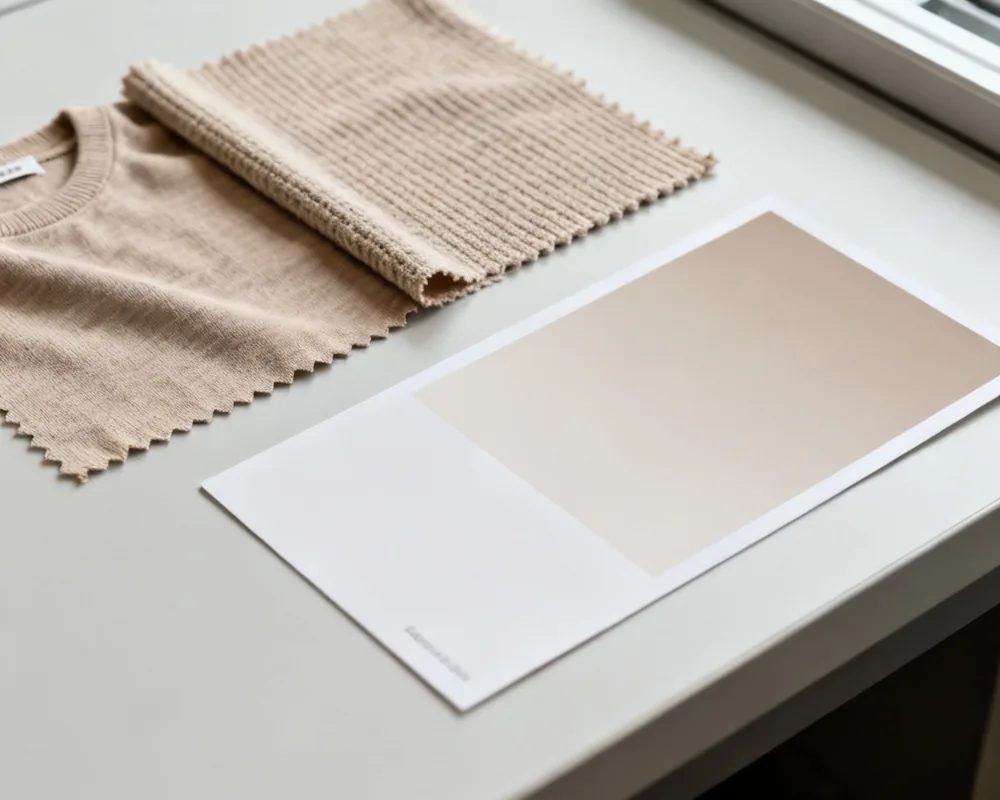
Place the cutting next to the written brief and mark only the differences that change the garment. Matching composition can still hide a different hand, so record drape, thickness and surface hair as observations. Keep the shade reference, whether a lab dip or a physical standard, in the same envelope as the cutting. If the swatch finish is not the finish you want in bulk, write that on the same card. Comparing three unrelated cloths in one note will not show which variable moved. One cloth, one question, one dated comment is enough for this step.
Approval means the reference pack stays intact: shade band, handle comment and the finish name. It does not issue a certificate and it does not promise that the next roll will match. Phrase the limit in words a sewing room can apply, for example a shade judged against the physical standard under the same light. Date the note and name the person who compared the cuttings. When a test figure is attached, copy the method and the specimen condition onto the same line as the figure. A number without that pair cannot be reused on another quality.
Quantity and destination describe the conversation you want next. They are not a stock confirmation and they are not a ship date. Add the approval-note identifier so a later message can find the same swatch. If several colours remain open, list them on separate lines instead of blending them into one request. Close with the questions that are still open: a missing cuttable width, a finish whose wash behaviour is unknown, or a care method that has not been chosen. Those lines keep the handoff from turning into a vague reorder.
A service conversation stays usable when the material question, the sample question and the order question are written on separate lines. Composition, construction, GSM, usable width and finish describe the textile. Quantity, destination and requested timing describe the commercial request. A target requirement is not a reported result, and a page statement is not a batch approval.
| Request | Include | Keep separate |
|---|---|---|
| Sample discussion | Reference, colour direction and intended use | A screen image is not the approval standard |
| Specification question | Composition, construction, GSM, usable width and finish | An unknown value stays blank |
| Availability question | Material reference and the quantity under discussion | A catalogue page is not a delivery promise |
| Order context | Destination and the decision that still needs an answer | Do not merge it into the sample record |
Attach the sample reference, the shade note and the destination you want discussed.