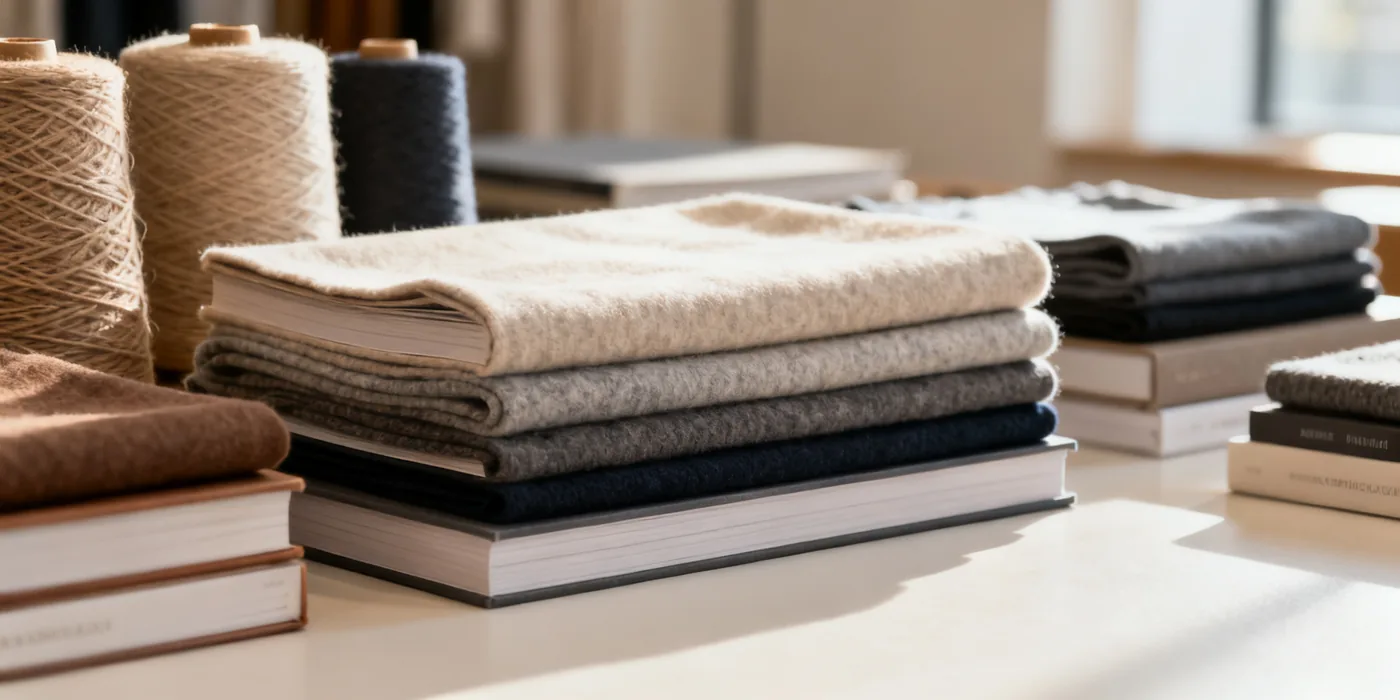
Name the physical cloth
Start with composition by mass, then say whether the cloth is woven or knitted. Warp and weft, or course and wale, tell a cutter more than a marketing fibre name. GSM is mass per square metre and needs a tolerance before anyone treats it as a target. Usable width is the cuttable distance inside the selvedge, not the full cloth width on the ticket. Finish is a process name, such as a peach, a calendar or a water-repellent treatment, and it should be paired with the sample state: greige, dyed, washed or coated.
Hand is a separate sentence. Two plain weaves at the same mass can feel dry or slick because yarn twist and sett differ. Write that feeling against a reference cutting rather than a single adjective. Shade language belongs with a physical standard or a lab dip code. A screen photo is only a direction.
When a report is mentioned, keep the method beside the result. Colourfastness, pilling, dimensional stability and tear strength answer different questions. Quoting one of them as a general quality score hides the specimen condition. If the method is unknown, ask for it instead of filling a gap with a typical apparel value.
Name the garment use
Care, exposure and sewing change which evidence matters. A shirt worn against skin raises pilling, seam slippage and wash stability. A lined jacket panel may care more about drape and a stable width at the needle. Outdoor wear is a different catalogue; this site stays with apparel cloth, so describe rain or abrasion only when that garment actually needs it, and keep liquid resistance separate from moisture vapour movement.
Processing notes are part of the language. Marker efficiency depends on usable width. Seam allowance and stitch density depend on construction. A stretch knit needs a recovery comment if the pattern was drafted on a stable woven. None of those notes require a capacity figure or a delivery promise.
Document words have their own grammar. A certificate names a holder, a product scope and a date. A fibre brand printed on a hangtag is not that certificate. Traceability questions are collected on the document ledger, where each record is checked before a sentence is repeated. The ledger is a reading method, not a list of approvals held by this site.